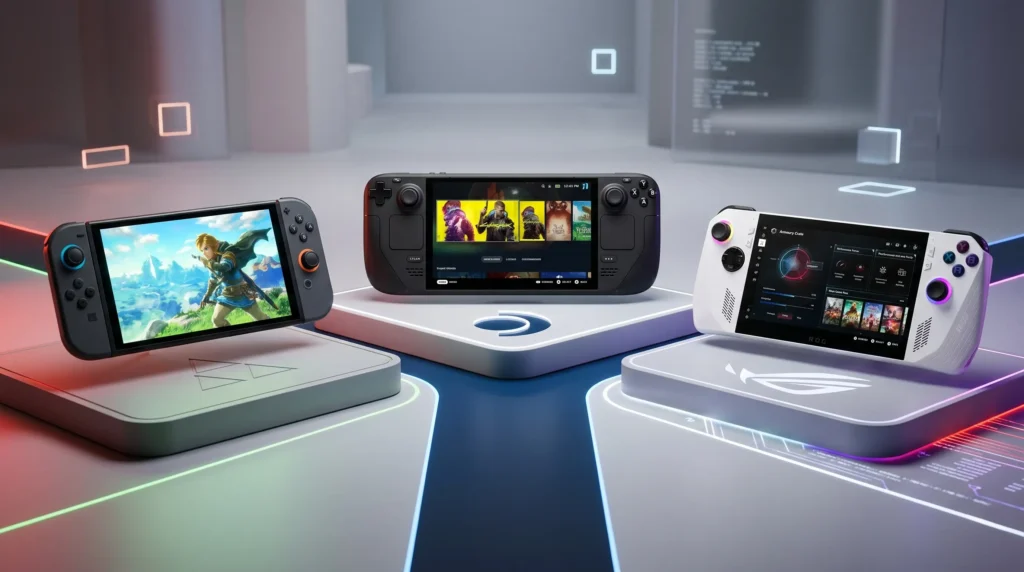
The handheld gaming market of 2026 is no longer defined by silicon. It is defined by memory contracts.
DRAM and NAND allocation has shifted toward AI infrastructure, and every major portable has repriced as a result: Valve raised the Steam Deck OLED by $240 in a single move, Lenovo’s Legion Go 2 has drifted as high as $1,999 at retail, and MSI’s newest flagship ships at $1,699.
That reshuffles every recommendation. The device that was the value pick in 2025 is now mid-priced, and the $999 machine has become the sensible one. Here is where the US market actually stands in July 2026.
Key Takeaways
- The ROG Xbox Ally X is the new value leader at $999. It is one of the only flagship handhelds that has held its launch MSRP through the memory crisis, and its Ryzen Z2 Extreme performance matches machines costing $350 to $700 more.
- Nintendo Switch 2 is the last sub-$500 mainstream option, and only until September 1. Nintendo has confirmed a $50 US increase to $499.99, making the current $449.99 price a hard deadline rather than a promotion.
- Intel’s Arc G3 Extreme finally makes the x86 handheld market competitive on silicon. The MSI Claw 8 EX AI+ delivers real ray tracing and XeSS 3 frame generation, but at $1,699 it prices itself against gaming laptops rather than consoles.
Quick Comparison: US Pricing, July 2026
| Device | Processor | Display | US Price | Best For |
|---|---|---|---|---|
| Nintendo Switch 2 | Custom NVIDIA T239 | 7.9″ LCD, 1080p, 120Hz | $449.99 (rises to $499.99 on Sept 1) | Exclusives and docked 4K output |
| ROG Xbox Ally | AMD Ryzen Z2 A | 7″ IPS, 1080p, 120Hz VRR | $599.99 (street pricing near $540) | Cheapest current-gen Windows handheld |
| Steam Deck OLED (512GB) | AMD Van Gogh (custom) | 7.4″ OLED HDR, 800p, 90Hz | $789 ($949 for 1TB) | SteamOS efficiency, trackpads, emulation |
| ROG Xbox Ally X | AMD Ryzen Z2 Extreme | 7″ IPS, 1080p, 120Hz VRR | $999.99 | Best overall performance per dollar |
| Lenovo Legion Go 2 (SteamOS) | AMD Ryzen Z2 Extreme | 8.8″ OLED, 1920×1200, 144Hz | from $1,199 | Display quality and detachable controllers |
| MSI Claw 8 EX AI+ | Intel Arc G3 Extreme (Panther Lake) | 8″ IPS, 1920×1200, 120Hz VRR | $1,699 (Best Buy, Newegg) | Maximum frame rates and ray tracing |
Best Overall: ASUS ROG Xbox Ally X ($999.99)
The Ally X occupies an unusual position: it is the only flagship handheld whose price has not moved since launch. Everything around it went up, so it became the value choice by standing still.
The configuration is the reason it holds up. A Ryzen Z2 Extreme APU with 16 RDNA 3.5 compute units, 24GB of LPDDR5X, a 1TB SSD, and a power envelope that scales to 25W on battery and 35W plugged in. In practice it trades frames within a margin of error against the Legion Go 2, which uses the identical APU at a considerably higher price.
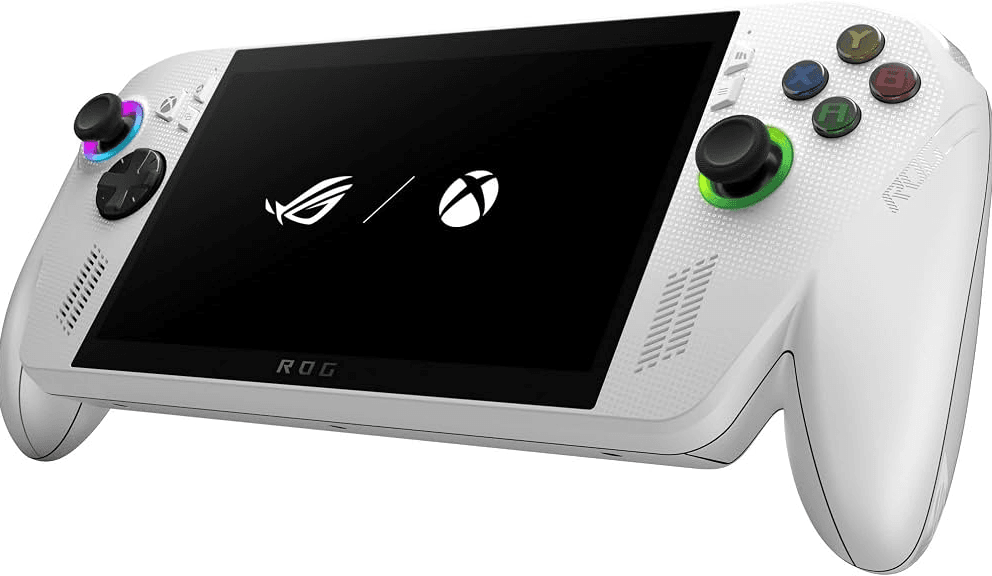
The differentiator is software. The Xbox full-screen experience suspends most of the Windows 11 shell at boot, which recovers both memory headroom and battery life that Windows handhelds have historically wasted. It also aggregates Steam, Battle.net, and Game Pass libraries into one interface, which matters because SteamOS still locks users out of a meaningful set of anti-cheat multiplayer titles.
Who should skip it
Buyers who primarily play Steam-native single-player titles, and who value trackpads or a Linux-based OS, will get more out of the Steam Deck OLED at a lower price.
Best Under $600: ROG Xbox Ally ($599.99)
The non-X Ally is the only current-generation Windows handheld still anchored below $600, and it has been dipping to $499 to $540 at Amazon, Best Buy, and Walmart during sale windows.
The compromise is the chip. Ryzen Z2 A is a four-core part with a smaller GPU allocation, paired with 16GB of RAM and a 512GB SSD. It handles 1080p indie titles, last-generation AAA, and emulation comfortably, but demanding 2026 releases require upscaling and aggressive settings reduction.
Two practical advantages keep it relevant: the 60Wh battery delivers strong endurance because the chip draws less power, and the SSD is user-replaceable in a standard M.2 2280 format, unlike the Steam Deck’s harder-to-source 2230 drives.
Best Closed Ecosystem: Nintendo Switch 2 ($449.99)
The Switch 2 wins on a metric no PC handheld can match: it is the only device in this category where the hardware is fully optimized against the software running on it.
The 7.9-inch 1080p 120Hz LCD is sharper and faster than the Steam Deck’s OLED panel, though it loses on contrast and HDR. Docked, it outputs up to 4K 60fps with a GPU clock increase, a boost the Steam Deck does not receive when connected to an external display.
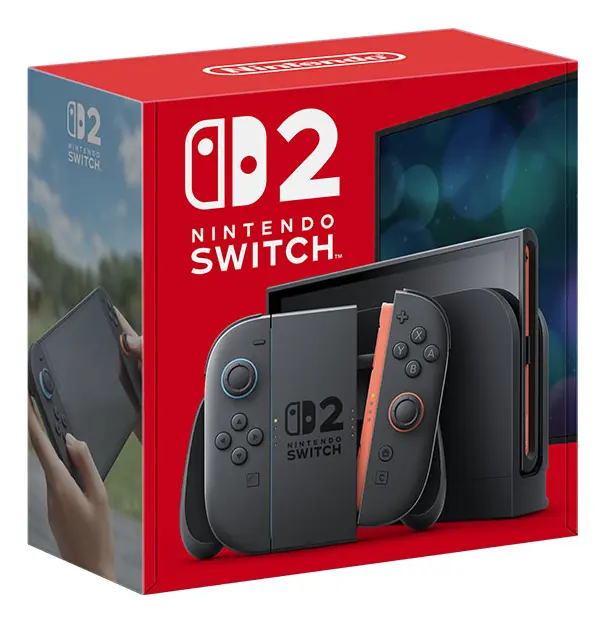
The economics run in the opposite direction, however. First-party Switch 2 titles sell at $70 to $80 and rarely discount, while Steam routinely cuts PC catalog pricing by 70 to 90 percent. Over a two-year ownership window, the software delta can erase the hardware savings entirely.
Timing note: Nintendo has confirmed the US MSRP moves to $499.99 on September 1, 2026. If the Switch 2 is on your list, the purchase window is closing.
Best SteamOS Device: Steam Deck OLED ($789 / $949)
Valve’s May 27, 2026 repricing was the single most disruptive event in this category. The 512GB OLED moved from $549 to $789 (a 43 percent increase), the 1TB from $649 to $949, and the entry-level LCD model was discontinued outright. The sub-$500 PC handheld tier effectively ceased to exist.
What you get for that money has not changed, and the hardware is approaching three years old. 7.4-inch HDR OLED panel is still the best-calibrated display in its size class, the dual trackpads remain unmatched for strategy games and mouse-driven emulation, and SteamOS delivers meaningfully better idle power behavior than Windows 11.
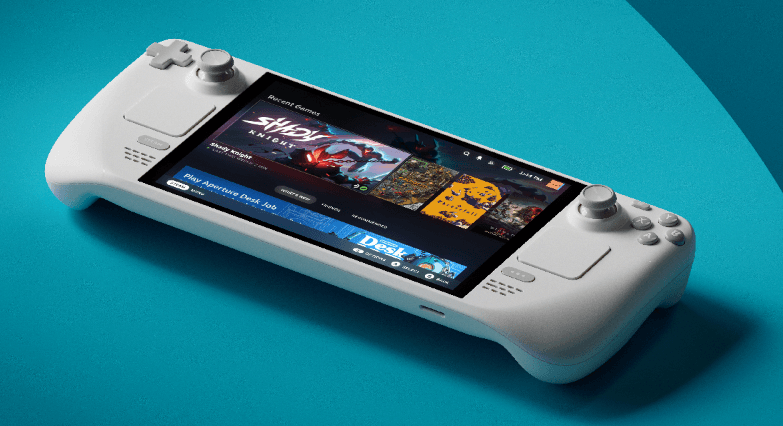
The most defensible purchase now is the certified refurbished tier at $629 (512GB) and $759 (1TB), which carries the same warranty terms and is currently the cheapest legitimate path into the SteamOS ecosystem.
The SteamOS 3.9 factor
Since April 2026, SteamOS 3.9 officially supports third-party AMD handhelds, including the ROG Xbox Ally and Ally X. Valve’s operating system is no longer a reason to buy Valve’s hardware. That decoupling weakens the Steam Deck’s strategic position considerably at its new price.
Best Display: Lenovo Legion Go 2 (from $1,199)
The Lenovo Legion Go 2 with 8.8-inch 1920×1200 144Hz OLED is the finest panel ever fitted to a portable gaming device. Nothing else in the category is close.
Pricing is where this device has become difficult to track. The SteamOS edition that launched in June 2026 starts at $1,199 and is now the cheapest route to a Z2 Extreme Legion Go 2. The Windows Z2 Extreme SKU from October 2025 lists at $1,349.99 for 32GB/1TB. Verify pricing at the moment of purchase rather than trusting a cached listing.
The value case rests on three features the Ally X does not offer: detachable controllers for tabletop play, 32GB of RAM, and a 2TB storage ceiling. Frame rates are effectively identical, since both run the same Z2 Extreme APU. You are paying for the display and the modularity, plus roughly 200 additional grams of weight.
The Intel Wildcard: MSI Claw 8 EX AI+ ($1,699)
Released June 23, 2026, the Claw 8 EX AI+ is the first widely available handheld built on Intel’s Arc G3 Extreme, part of the Core Ultra Series 3 (Panther Lake) platform. The integrated Arc B390 GPU uses Xe3 architecture with hardware ray tracing and XeSS 3 upscaling and frame generation.
The hardware is legitimate. Computex demonstrations showed 1080p at 60fps and above in Battlefield 6 and Forza Horizon 6 at High settings with XeSS enabled. The 80Wh battery is larger than anything AMD competitors ship, and the dual Thunderbolt 4 ports make it the most capable docking device in the category.
If you plan to run it as a desktop replacement through an external display, our breakdown of USB4 and Thunderbolt 5 certification tiers explains why that port distinction determines real bandwidth.
The problem is arithmetic. At $1,699 (or $1,799.99 direct from MSI for the 32GB/1TB build), the Claw costs more than a PS5, an Xbox Series X, and a Switch 2 combined. MSI has publicly acknowledged room for a further increase past $2,000 if memory contracts tighten again.
Coming in October: Acer Predator Atlas 8
Acer’s first Predator-branded handheld uses the same Arc G3 and G3 Extreme silicon and arrives in North America in October 2026. US pricing has not been announced, but UK pre-registration lists £999.99 for the base 16GB/512GB configuration and £1,499.99 at the top of the range.
Expect a US entry point above $1,100. There is no mid-range configuration planned.
Why Every Price on This List Moved
This is a component sourcing story, not a margin story. AI infrastructure buildout has absorbed enormous DRAM and NAND capacity, and consumer hardware is competing for the residual allocation.
The pattern is visible across every adjacent category. Sony moved the PS5 to $649.99 and the PS5 Pro to $899.99. Microsoft repriced the Xbox Series X to $649.
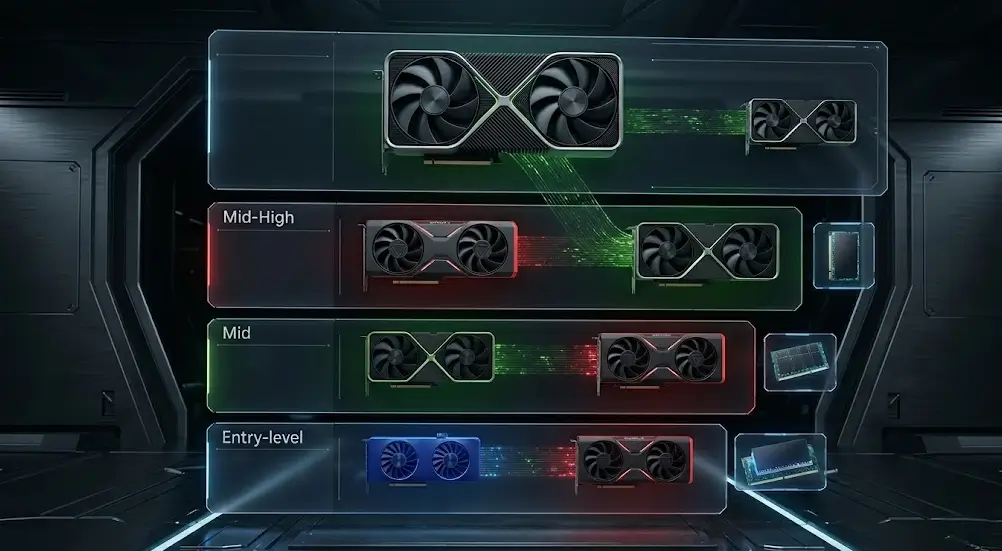
The same memory constraint is reshaping the discrete graphics market, as documented in our analysis of GPU pricing by tier in 2026, and it is driven by the same underlying demand that has made local AI compute hardware like the NVIDIA DGX Spark a strategic priority for enterprises.
Jefferies Equity Research expects two additional memory price surges in the second half of 2026. Waiting for relief is not a strategy: relief depends on new fabrication capacity, and some analysts project elevated pricing persisting toward 2030.
How to Choose
- Budget under $500: Nintendo Switch 2 before September 1, or a refurbished Steam Deck OLED at $629 if PC titles matter more than exclusives.
- Budget $600: ROG Xbox Ally, ideally caught at a sale price near $540.
- Budget $1,000: ROG Xbox Ally X. Nothing else in the category returns more performance at this price.
- Budget $1,200 and above: Legion Go 2 SteamOS edition for display quality, or the Claw 8 EX AI+ if you need Intel’s ray tracing and Thunderbolt docking.
- Buying used or refurbished: Previous-generation Ryzen Z1 Extreme devices (original ROG Ally, original Legion Go) now outperform the Z2 A at similar street pricing, and both will receive the Xbox full-screen experience update.
FAQ
Buy now if you need one. Analyst forecasts point to two more memory price increases before the end of 2026, and Nintendo’s confirmed September increase is already scheduled. There is no near-term catalyst that would push prices down.
Yes. SteamOS 3.9 added official support for AMD-based third-party handhelds in April 2026, including the ROG Xbox Ally and Ally X, with no community workaround required. Intel Arc G3 devices are not yet officially supported. Note that switching to SteamOS forfeits access to several anti-cheat protected multiplayer titles.
Substantially, yes. The Z2 Extreme carries 16 RDNA 3.5 compute units against a significantly reduced GPU allocation on the Z2 A, and it sustains higher power limits. In demanding 2026 titles the gap is large enough to determine whether a game is playable at 1080p at all. The older Z1 Extreme also outperforms the Z2 A.
Only if portability is the priority. At $1,700, a handheld competes directly with laptops offering more thermal headroom, discrete graphics, a keyboard, and a larger display. Handhelds justify their cost through form factor, not frames per dollar. Below $1,000 the argument holds comfortably. Above $1,500 it becomes a specific preference rather than a value calculation.