Key Takeaways
- 1 TB is the operational minimum, not the smart buy: Modern operating systems, current game engines, and local AI models consume storage at a rate that makes 1 TB the floor, not the ceiling. Purchasing it today means purchasing a near-term bottleneck.
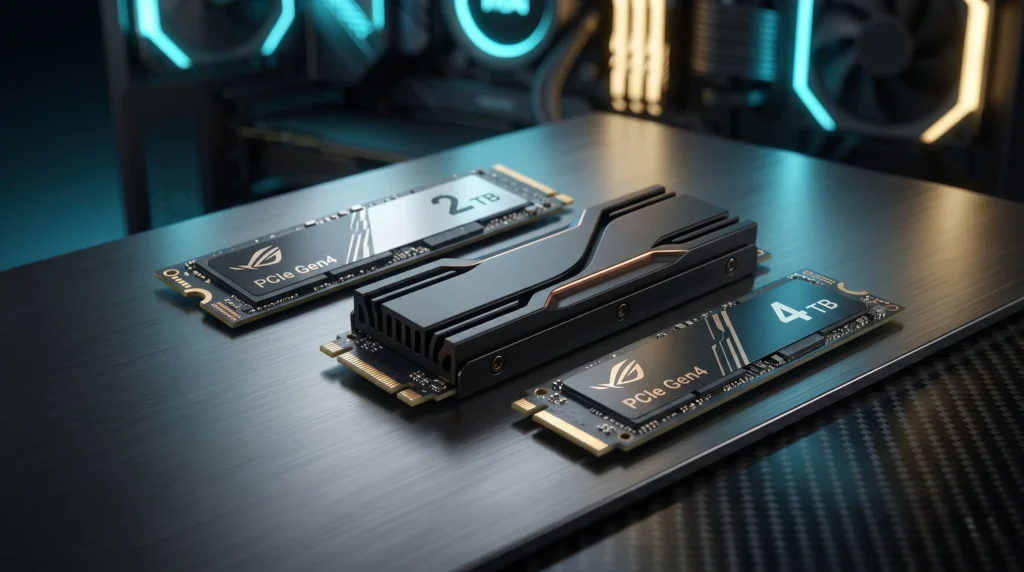
- PCIe Gen4 is the actual 2026 standard: It delivers the optimal balance between cost, thermal stability, and sequential read speeds up to 7,500 MB/s. Gen5 remains specialist territory reserved for specific professional workloads.
- Capacity selection requires three variables: Physical volume, sustained write speed, and endurance measured in TBW. Ignoring any one of them is the primary cause of storage decisions that age poorly.
The Price Paradox: Why Buying 1 TB in 2026 Is the Wrong Move
The semiconductor market is in a phase of selective scarcity. AI data center demand for NAND flash memory has displaced a significant share of consumer-grade production capacity. The direct consequence: 1 TB drives now exceed $270 across multiple retail channels, producing the worst cost-per-gigabyte equation in the current market.
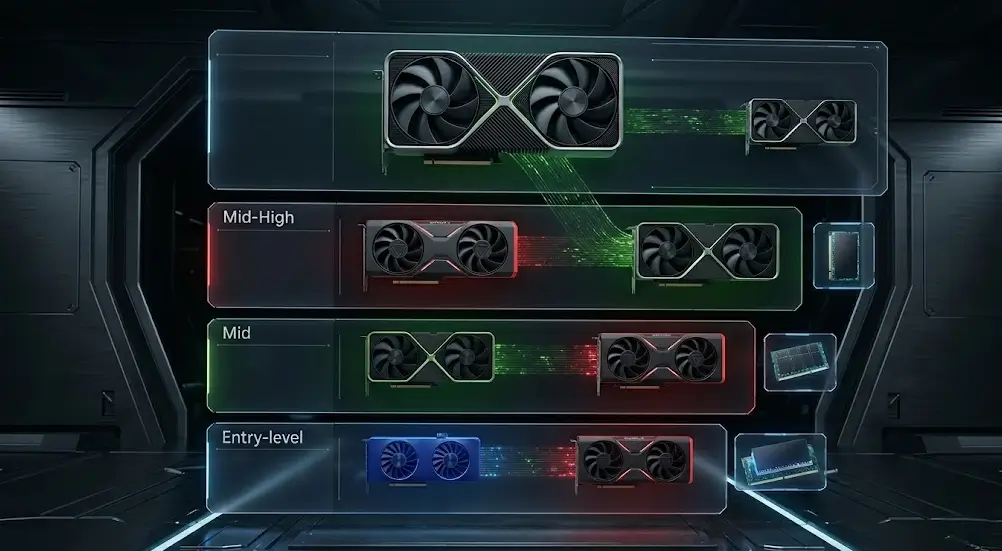
This supply chain pressure directly mirrors the dynamics covered in the Best Graphics Cards by Price Range in 2026, where GDDR7 shortages and AI infrastructure demand have created comparable pricing distortions across consumer hardware segments.
The rational alternative is a 2 TB or 4 TB drive, which offers a significantly lower amortized cost-per-gigabyte and eliminates the risk of premature obsolescence from accumulating temp files, application databases, and local AI model weights.
One figure most product spec sheets omit: a drive marketed as 1 TB delivers 931 GB of usable space in practice. Subtract the operating system and system drivers, and the operational margin contracts considerably before the first application is installed.
How Much Capacity You Need by Use Case
| User Profile | Recommended Capacity | Interface | Read Speed |
|---|---|---|---|
| Students and office productivity | 512 GB – 1 TB | SATA III or NVMe Gen3 | 500 – 3,500 MB/s |
| Gaming (PC and consoles) | 2 TB | NVMe PCIe Gen4 M.2 | 5,500 – 7,500 MB/s |
| Creators and video editors | 4 TB – 8 TB | NVMe Gen4 or Gen5 with DRAM | 7,000 – 14,000+ MB/s |
For the creator profile, the storage equation rarely ends at the primary SSD.
The proliferation of on-device AI inference – now viable on compact desktop hardware as detailed in the NVIDIA DGX Spark analysis – adds a persistent and frequently underestimated storage overhead for model weights, training datasets, and inference logs that scales rapidly with usage.
PCIe Gen4 vs Gen5: Where the Real Divide Is
Gen5 reaches theoretical speeds above 14,000 MB/s, but that specification carries a dual cost: a significantly elevated acquisition price and demanding thermal management requirements. Gen5 controllers generate enough heat to require active heatsinks in sustained transfer scenarios.
For the vast majority of professional and prosumer workloads, Gen4 represents the optimal equilibrium between performance and operational stability.
When evaluating external NVMe options alongside internal storage, the connectivity layer becomes as consequential as the drive specification itself. The USB4 and Thunderbolt 5 breakdown covers the interface variables that determine whether a fast external drive actually performs at its rated specification in real-world conditions.
Consoles: The Non-Negotiable Specifications
PlayStation 5 requires NVMe PCIe Gen4 with a minimum 5,500 MB/s sequential transfer rate. Without a factory-integrated heatsink, the drive triggers thermal throttling mid-session, with direct and measurable consequences on frame delivery.
The Adata Legend 860 is a validated internal option for this platform. For portable external use, the Adata SD620 provides the necessary transfer headroom for passive library storage.
Xbox Series X/S operates on a proprietary storage expansion architecture. Seagate and Western Digital certified expansion cards eliminate installation complexity entirely, but restrict market flexibility and sustain price premiums relative to the open M.2 ecosystem.
The Seagate Storage Expansion Card (STJR1000400) remains the primary certified 1 TB option for this platform.
Beyond Capacity: What Determines Real-World Lifespan
SLC Cache Buffer
SSDs reserve a fraction of their total capacity to operate as a single-level cell (SLC) write cache, enabling burst writes at maximum rated speed. A high-end 1 TB unit typically reserves approximately 144 GB for this function.
Once that threshold is crossed during bulk transfers (RAW video files, AI model datasets), write speed drops sharply on drives without a dedicated physical DRAM chip. This is not minor degradation. It is a structural bottleneck with measurable impact on any workflow that involves sustained sequential writes.
Physical Endurance (TBW)
Terabytes Written (TBW) defines the total data volume a controller can process before silicon cell degradation becomes operationally relevant. Standard 1 TB drives certify between 300 and 600 TBW. That range is adequate for office-class use. It is insufficient for intensive software development pipelines or daily multimedia editing workflows, where TLC NAND consistently outperforms QLC in long-term data retention and write cycle stability.
This hardware planning logic applies consistently across storage decisions. Selecting the wrong drive has the same structural impact as selecting an inadequate memory configuration: both create a ceiling that only becomes visible under sustained load.
FAQ
AI data center demand for NAND flash memory has compressed consumer market supply. Production capacity is being prioritized for high-density infrastructure workloads, leaving consumer-grade units in shorter supply at inflated prices. The 1 TB segment is disproportionately affected, as it sits at the intersection of high consumer demand and reduced production allocation.
Yes, within clearly defined operational boundaries. The HDD must function strictly as cold storage: backups, passive media libraries, and archival data. Running active software from a mechanical drive in 2026 produces load times that are structurally incompatible with current game engines, containerized development environments, and modern operating system I/O patterns.
Three identical copies of critical data, stored across two different physical media types, with at least one copy maintained in a remote location or cloud environment. It is the established industry standard for preventing irreversible data loss from hardware failure, physical incidents, or localized system corruption.
Unlike mechanical drives, SSDs produce no audible pre-failure signals. Diagnostic tools read the drive’s internal SMART telemetry directly: peak and sustained operating temperatures, remaining health percentage, and cumulative write wear against the rated TBW ceiling. Periodic monitoring allows you to identify degradation trajectories before they result in data loss rather than discovering failure through inaccessible files.