
In wearables, the default assumption is that more is better: more screens, more notifications, more things pulling at your attention. After almost a year of wearing this thing nonstop, I’ve landed somewhere else. The real value of wearable tech isn’t in what it shows you. It’s in what it quietly does for you.
What follows is my experience with Whoop 5.0, from sensor accuracy to biometric prediction.
Key Takeaways
- The screenless design removes digital fatigue entirely and frees up your other wrist for a traditional watch or a smartwatch with different functions.
- The device flagged a pneumonia case before symptoms showed up, catching a 30% jump in resting heart rate while I slept.
- This is a recurring investment, not a one-time purchase. The return only materializes if you’re willing to change habits based on the data.
Transparency note: This analysis is based on 320 days of personal use, paid for out of my own pocket. If you decide to try Whoop after reading this, there’s a link at the end of the article for a free month.
The Zero-Friction Design
The first thing that stands out about Whoop is the complete absence of a screen. If you value technology but want less digital noise, the device disappears into the background as a discreet accessory.
That approach puts it in a different category from most trackers, and it’s worth understanding how screenless trackers compare against each other before committing.
Hardware Versatility
Because it isn’t a traditional watch, it frees up your left wrist for classic watches or smartwatches with other functions. Moving the Whoop to the right side doesn’t break the look.
The Switch to the Bicep
After months of wrist wear, moving to the Bicep Band was a technical turning point. On the wrist, optical sensors deal with noise from bone movement. On the bicep, capture consistency improves sharply, which eliminated false nighttime activity readings.
Battery Life
In 2026, it still runs 10 to 14 day cycles. No charger anxiety, even on long trips.
When the Algorithm Predicts Illness
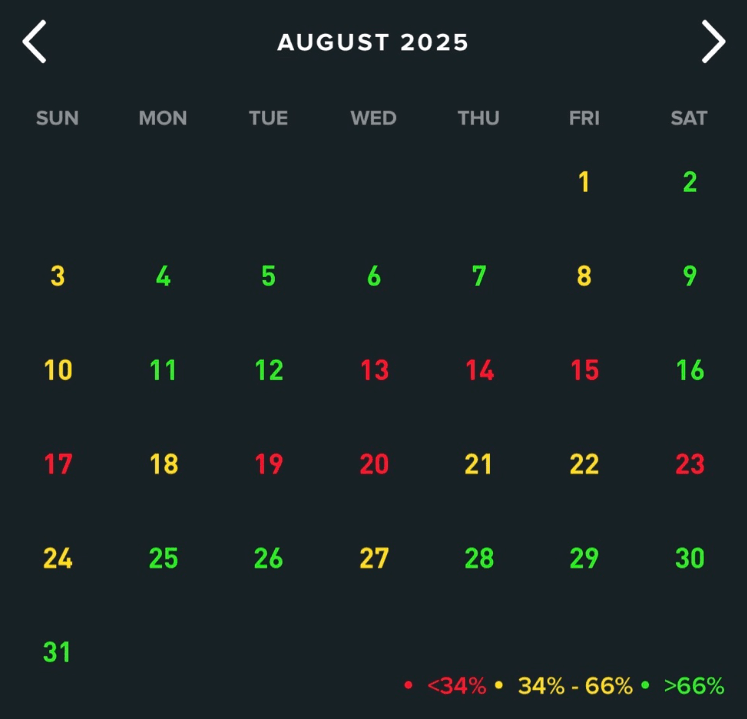
A device proves its authority during a crisis. During my time with it, I came down with pneumonia, and the hardware caught it before the symptoms were obvious.
The RHR Timeline
| Date | RHR (Resting Heart Rate) | Recovery Status |
|---|---|---|
| Baseline | 53 to 54 bpm | Green (Optimal) |
| Day -3 | 59 bpm | Yellow (Warning) |
| Day -2 | 66 bpm | Red (Critical) |
| Day 0 (Symptoms) | 69 bpm | Red (Collapse) |
What the Hardware Saw Before I Did
Watching a 30% RHR increase happen while I slept was the definitive early warning. My brain kept telling me I was just tired. The hardware was showing that my immune system was running at maximum processing capacity.
That kind of predictive biological maintenance is, on its own, a serious argument for wearing these sensors.
From the Weight Room to the Court: Quantifying Total Load
One of the hardest problems in sports tech is measuring strength training. Most devices fail here because they ignore that lifting 220 lbs stresses the body differently than running a mile, even when heart rate looks similar.
- Real Muscular Load: By logging every exercise and weight, Whoop calculates Strain based on effective load, not just cardiac output.
- No More Relying on Memory: Setting up your routines takes an upfront time investment, but once they’re built, the process flows. It gives you precise tracking of progressive overload: if I lifted a given weight last week, the interface pushes me to beat it. It works like an intelligent training log.
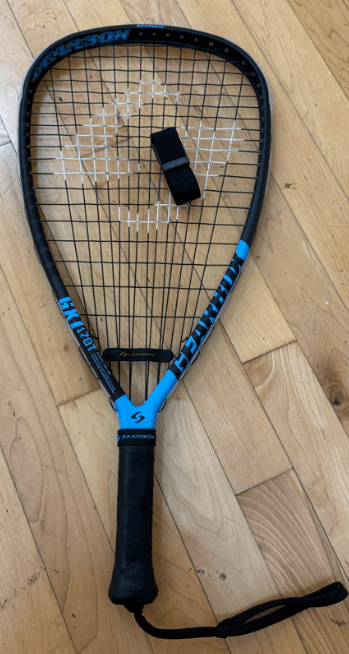
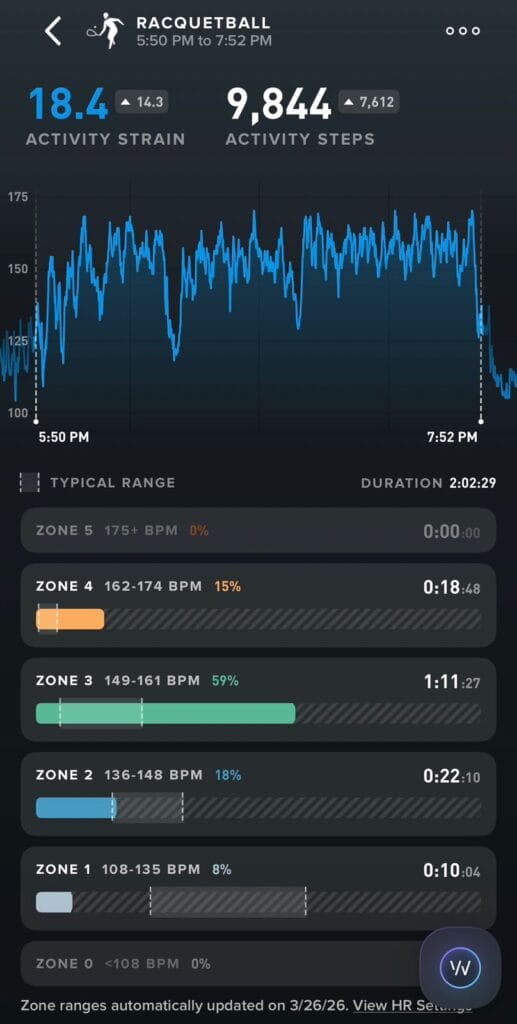
- The Racquetball Factor: Whoop has evolved to understand niche sports.
The Biometric Hangover: 30% Recovery
The technology doesn’t just measure how much you give. It measures what it costs you. The day after hitting that 20.0 Strain, my Recovery dropped to 30%.
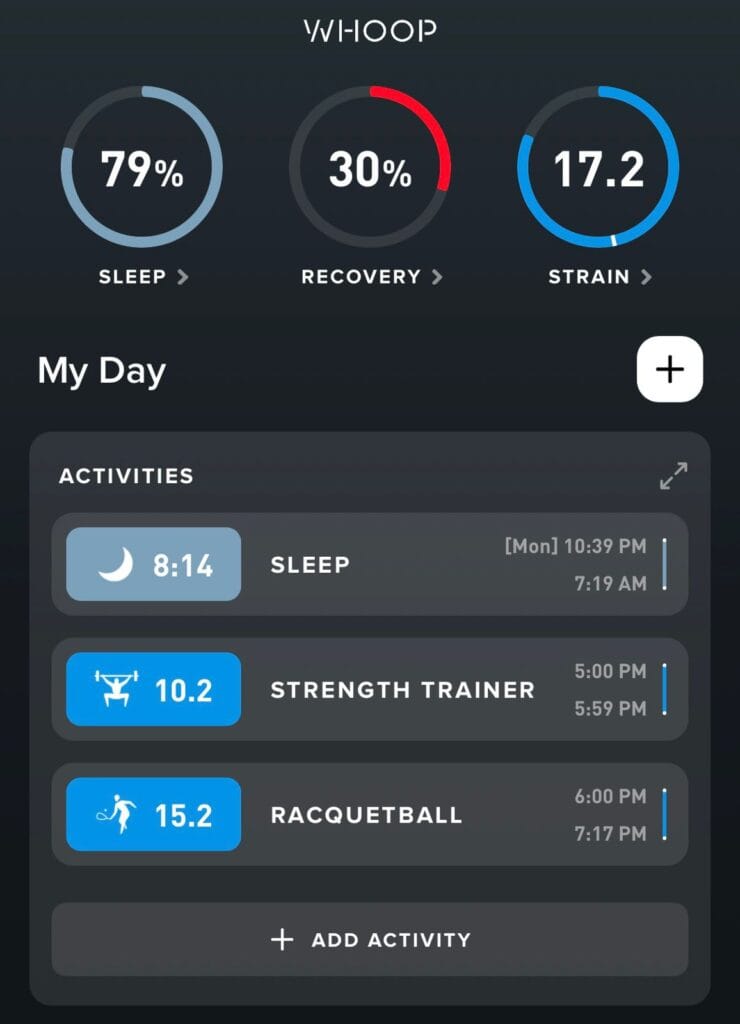
This biological transparency matters. Seeing that number in red isn’t an invitation to slack off. It’s a technical data point for making energy economy decisions.
It means understanding that my body’s hardware needed a recharge before going back to maximum load. I still logged a 17.2 Strain that day.
AI and Whoop Coach: Applied Intelligence
Integrating advanced language models (LLMs) has transformed the app. You’re no longer reading static graphs. You’re having a conversation with your own data.
- Travel Assistance: Jet lag coaching is a clear example of AI using location and circadian rhythms to give actionable advice on hydration and light exposure.
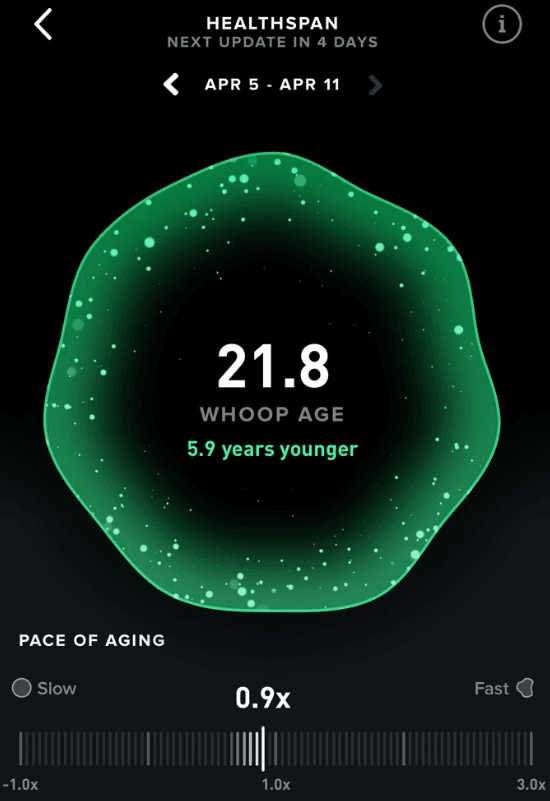
- Healthspan and Longevity: With metrics estimating biological age (in my case, 5.9 years below my chronological age), the device stops being a step counter and becomes a longevity monitor.
The Subscription Economy: Is It Worth It?
From an economic standpoint, Whoop applies a Software as a Service (SaaS) model to hardware. That trend is redefining the entire tech industry, from large AI models down to wearables. The collapse of the freemium model is already documented on platforms like OpenAI and Gemini, and Whoop is no exception to that logic.
Cost vs. Value
It’s a significant recurring investment. But if you use it to improve productivity through sleep hygiene and illness prevention, the ROI shows up in long-term health.
How that math works out depends heavily on which plan you land on, and the plan tier changes the calculation more than most buyers expect.
Who It’s Actually For
This is not a device for the casual user. It’s a tool for someone who wants granular data and is willing to change habits (sleep consistency, nutrition) based on technical evidence.
Final Verdict
After almost a year, my conclusion is straightforward: Whoop isn’t for everyone, but it’s essential for anyone who understands that the body is the most important hardware they own.
In a market saturated with devices that just feed you notifications, Whoop gives you context. It taught me that my body signals trouble before it gets sick, that my strength training has a real impact on my longevity, and that sometimes the best training session is the one you skip to allow deep recovery.
If you want a device you forget you’re wearing while it processes your health 24/7, this is the gold standard in 2026.
FAQ
In real use, cycles run between 10 and 14 days. That range holds up on long trips, which effectively removes charger anxiety from the equation.
Yes, in my experience. Optical sensors on the wrist pick up noise from bone movement, while the bicep gives far more consistent capture. The switch eliminated false nighttime activity readings.
It does, because it calculates Strain from effective load rather than heart rate alone. You log each exercise and weight, which also gives you accurate progressive overload tracking.
Only if you act on the data. If you use it to improve sleep hygiene and catch illness early, the return shows up in long-term health rather than in the device itself.
Want to Optimize Your Own Performance?
If this analysis convinced you to make the jump and start understanding your own data (and improve your Healthspan along the way), here’s my referral link.
Using it gets you a free month of Whoop so you can test it properly. I get a free month as well, which helps keep real hardware analysis coming here at Rallynomics.